
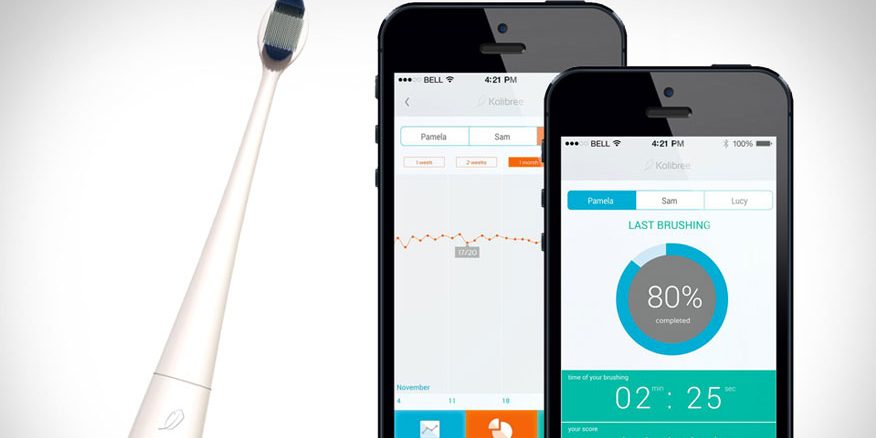
When this article was first published in 2017, app-connected toothbrushes were a brand-new idea. Kolibree, a French company, was one of the first to bring one to consumers: an electric toothbrush that links to a smartphone app over Bluetooth and records how you brush.
Since then, smart toothbrushes have become much more common. Several major oral care brands now sell electric toothbrushes with app feedback, and Kolibree has worked with Colgate-Palmolive on the Colgate hum smart toothbrush, introduced in 2020.
The basic idea has stayed the same: you brush as usual, and the app shows how long you brushed, which areas you covered, and where you could improve. Many apps also use games and reminders to make brushing more engaging, especially for children. Below, our Fresno dental team explains how these toothbrushes work, who may benefit, and what they can and cannot do for your oral health.
Key Takeaways
- Smart toothbrushes are electric toothbrushes that connect to an app and give feedback on brushing time, coverage, and pressure.
- The feedback can help children, people with braces or aligners, and anyone who wants to build more consistent brushing habits.
- A smart toothbrush does not replace flossing, professional cleanings, or regular dental checkups.
- The most important factors are still technique and consistency: two minutes, twice a day, with fluoride toothpaste and gentle pressure.
- Your dentist or hygienist can review your brushing and recommend the type of toothbrush that suits you best.
How Do Smart Toothbrushes Work?
Smart toothbrushes are electric toothbrushes with built-in sensors that connect to a smartphone app, usually through Bluetooth. Depending on the model, the brush may track how long you brush, which areas of your mouth you have reached, and how much pressure you are using. The app then shows this information so you can see which areas you tend to miss and adjust your routine.
Features vary from brand to brand. Some apps give real-time guidance while you brush, some offer reminders and progress reports, and some include games designed to help children brush for the full recommended time.
Can a Smart Toothbrush Improve Your Oral Health?
A toothbrush on its own does not prevent cavities or gum disease; consistent technique and habits do. A smart toothbrush can help by giving you feedback you would not otherwise get, for example:
- Reminding you to brush for a full two minutes
- Showing areas of the mouth you often skip, such as the back molars or the inner surfaces of the teeth
- Warning you when you press too hard, which can irritate the gums over time
- Keeping a record of your brushing that you can review over weeks and months
For many people, simply seeing this information is enough to build better habits.
Who May Benefit Most From a Smart Toothbrush?
- Children who need encouragement to brush long enough and reach every tooth
- People with braces or clear aligners, who have more places for plaque to collect
- Patients with early gum problems, who need to be thorough along the gumline without brushing too hard
- Anyone who likes tracking data and staying motivated with progress reports
If you are not sure whether a smart toothbrush is right for you, ask your dentist or hygienist at your next visit. They can point out the areas where your brushing needs the most attention.
What a Smart Toothbrush Cannot Do
Even the most advanced toothbrush has limits. It cannot clean between your teeth, so daily flossing or another interdental cleaner is still important. It also cannot remove hardened tartar, which can only be removed during a professional dental cleaning, and it cannot detect cavities or other problems that need a dental examination.
Brushing Basics, With or Without a Smart Toothbrush
- Brush twice a day for two minutes each time
- Use a fluoride toothpaste
- Choose a soft-bristled brush head and use gentle pressure
- Angle the bristles toward the gumline and clean every surface of each tooth
- Replace your toothbrush or brush head every three to four months, or sooner if the bristles are frayed
- Clean between your teeth once a day
Want more tips? Learn about oral hygiene education in Fresno or read why many dentists recommend an electric toothbrush over a manual one.
Common Brushing Mistakes a Smart Toothbrush Can Help You Fix
- Brushing too quickly: many people brush for well under two minutes. A built-in timer makes it easy to brush for the full time.
- Brushing too hard: scrubbing with heavy pressure does not clean better and can wear down enamel and irritate the gums. Signs include frayed bristles after only a few weeks, sensitive teeth, or gums that look like they are pulling back.
- Missing the same areas every day: the inside surfaces of the lower front teeth and the backs of the last molars are commonly skipped. Coverage tracking shows you where these gaps are.
- Skipping the gumline: plaque that collects where the teeth meet the gums can lead to gingivitis. Angle the bristles toward the gums and use small, gentle movements.
- Brushing right after acidic foods or drinks: after citrus, soda, or sports drinks, rinse with water first and wait a while before brushing to protect softened enamel.
If you notice bleeding gums, tooth sensitivity, or gums that seem to be receding, schedule a checkup so your dentist can find the cause and recommend the right care.
How to Choose a Smart Toothbrush
Smart toothbrushes range from simple models with a timer and a basic app to premium brushes with detailed mouth maps. Before you buy, compare these features:
- Pressure sensor: a light or alert that warns you when you brush too hard is one of the most useful features for protecting your gums and enamel.
- Timer and quadrant pacer: a short pulse every 30 seconds reminds you to move to the next part of your mouth so each area gets equal time.
- Coverage tracking: some apps show which teeth or surfaces you reached and which you missed.
- Brush head cost and availability: you will replace the head every few months, so check the price and how easy replacements are to find.
- Battery life and charging: a long-lasting battery is more convenient, especially if you travel.
- Soft bristle options: choose a soft brush head, particularly if you have sensitive teeth or receding gums.
- App privacy: read how the app stores and shares your data, and turn off any features you do not need.
- ADA Seal of Acceptance: some powered toothbrushes carry the American Dental Association Seal, which means the manufacturer has shown the product is safe and effective.
A more expensive brush is not always better for you. The best toothbrush is the one you will use correctly twice a day.
Smart Toothbrushes for Braces and Clear Aligners
Brackets, wires, and attachments create extra places for plaque to build up. Feedback on coverage and timing can help patients with braces spend enough time around each bracket and along the gumline. If you wear clear aligners such as Invisalign, brush your teeth before putting your aligners back in so food and plaque are not trapped against your teeth.
How to Care for Your Electric or Smart Toothbrush
- Rinse the brush head thoroughly with water after each use
- Store it upright and let it air-dry; avoid closed containers that stay damp
- Detach the brush head from time to time and rinse the connection area
- Do not share brush heads with other family members
- Replace the brush head every three to four months, after an illness, or when the bristles start to splay
Is a Smart Toothbrush Worth It?
For some people, a smart toothbrush is a helpful motivator that turns brushing into a habit with clear goals. For others, a standard electric or manual toothbrush with good technique works just as well. Either way, what matters most is brushing thoroughly twice a day, cleaning between your teeth daily, limiting sugary snacks and drinks, and visiting your dentist for regular checkups.
At your next visit, our team can review your brushing technique, show you any areas that need extra attention, and help you decide whether a powered or smart toothbrush makes sense for you or your children.
Frequently Asked Questions About Smart Toothbrushes
Is a smart toothbrush better than a regular electric toothbrush?
A smart toothbrush cleans in much the same way as other electric toothbrushes. The difference is the feedback from the app. If that feedback helps you brush more thoroughly and more consistently, it can be worthwhile.
Do I still need dental checkups if I use a smart toothbrush?
Yes. Regular checkups and cleanings allow your dentist to find problems early and remove tartar that brushing cannot.
Are smart toothbrushes good for kids?
Many families find that the app’s games and timers help children brush longer. Parents should still supervise young children and help with brushing until they can do it well on their own.
For a free consultation, please visit our dental office in Fresno on 6721 N Milburn Ave Ste 101, Fresno CA 93722 or call our dental clinic at (559) 825-0990.